Atelier-style drawing instruction
Learn to see.
Learn to draw.
Classical drawing instruction for artists of any age, including school and homeschooled students ages 14 and over.
Drawing more accurately begins with learning how to see, measure, and build what’s in front of you.
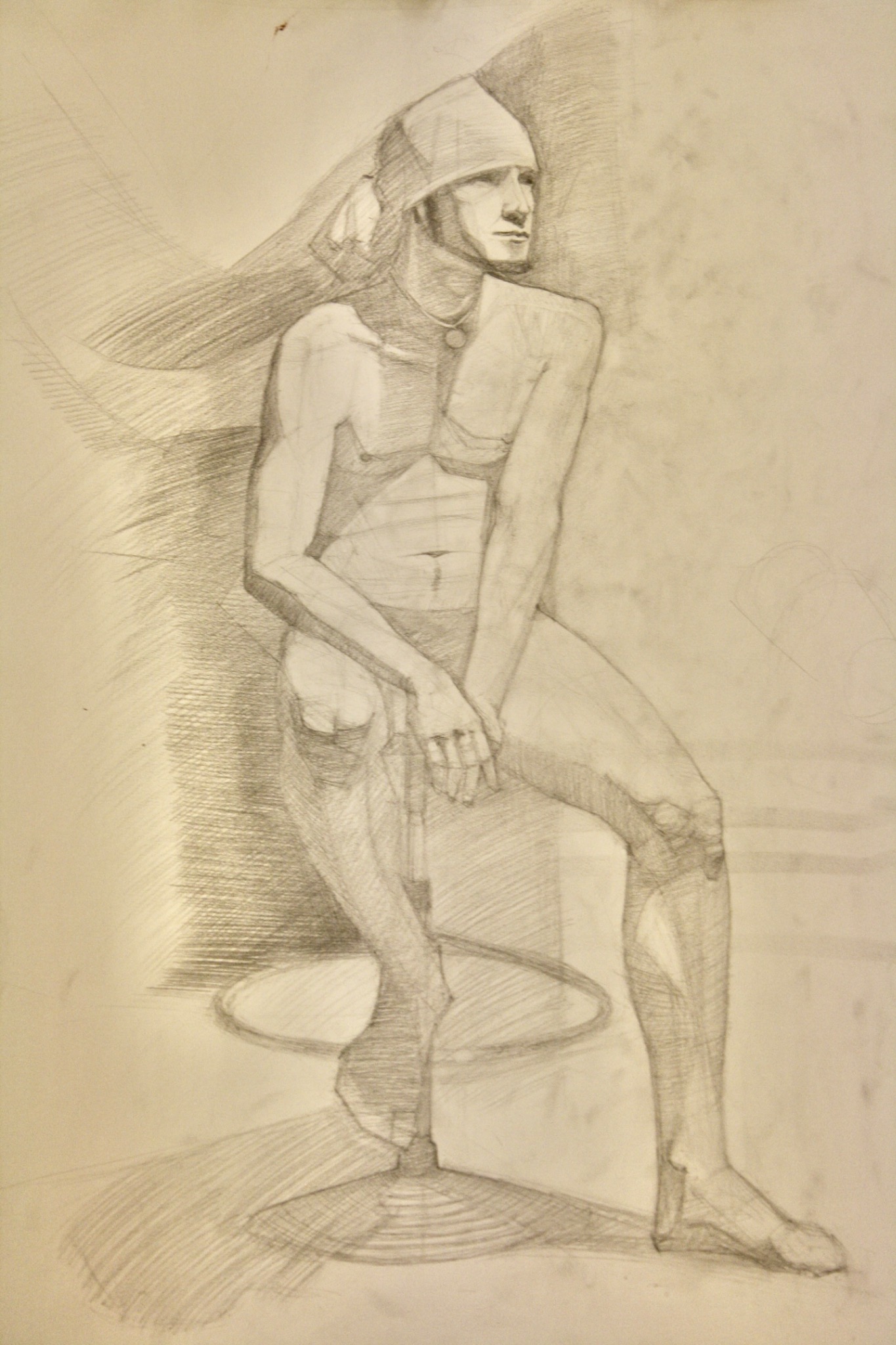
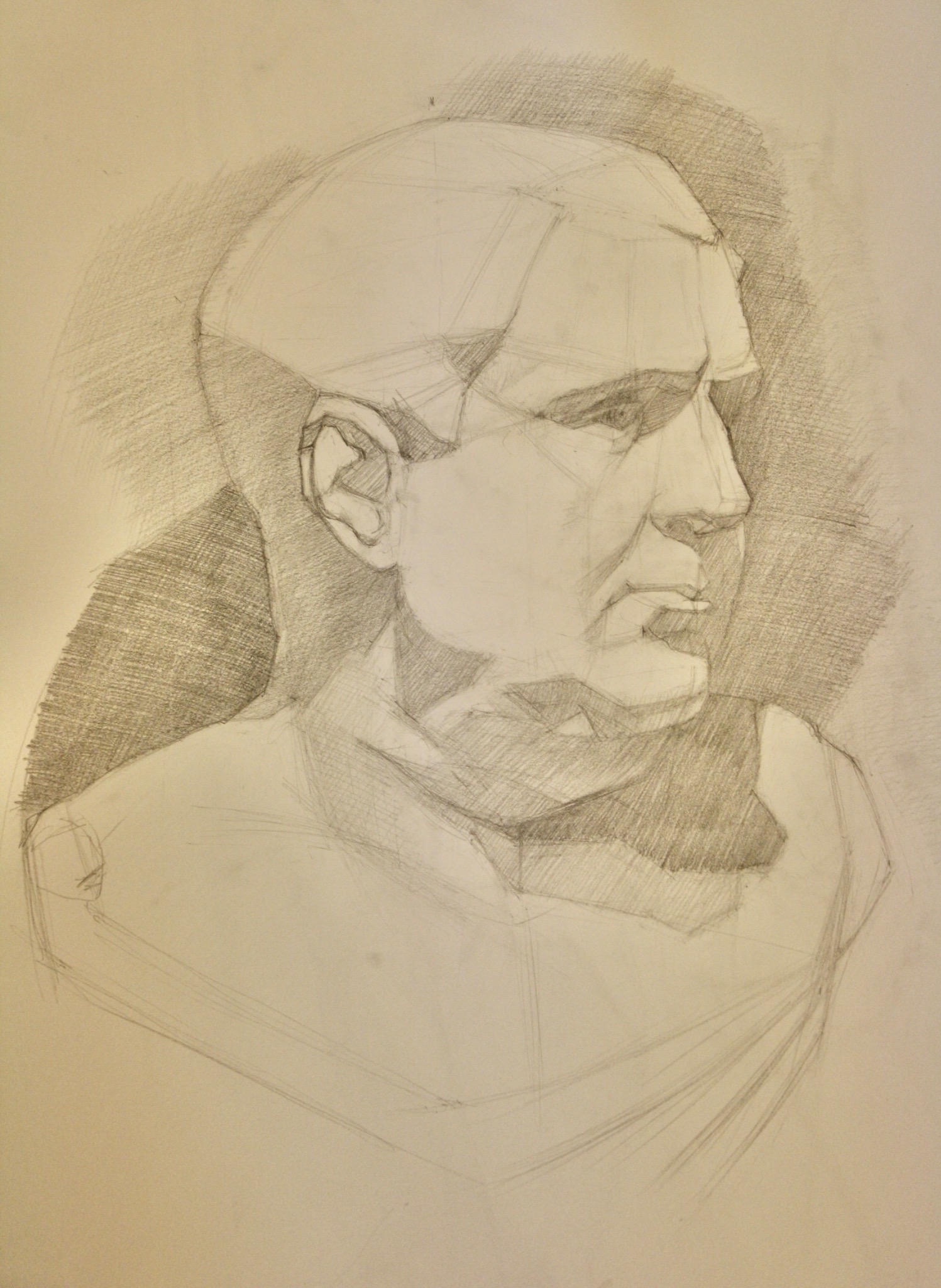 Study in graphite
The approach
A method you can return to.
If you’re looking for serious, atelier-style training, the Salem Drawing Academy offers a structured path to develop your skill. Through guided practice, careful observation, and repeated work from life, you’ll learn to measure, correct, and draw your subjects with greater accuracy.
You'll be coached through a repeatable method for representational drawing to help you develop habits you can use on your own.
The goal is to become more proficient at drawing your subject accurately—not just to finish one drawing that happens to turn out well.
The curriculum
Your three-year drawing program
Three 10-week terms each academy year. Progress from foundational accuracy to sustained, independent representational drawing through guided practice, repetition, and review.
Explore each year, then open a term to see its 10-week plan.
01Year 1Foundation and accuracy
Train your eye, establish a dependable drawing process, and carry it from simple subjects into still life and figure work.
Winter · Term 1Foundations of accurate drawingJanuary 4–March 24, 2027 · 10 teaching weeks
Build the observation, measuring, and correction habits that support accurate representational drawing.
- Week 1
Seeing the whole
Learn to establish the subject’s overall structure before detail, giving every later decision a reliable reference.
- Week 2
Observation through repetition
Repeat the starting process with new subjects and compare angles and distances to develop consistent visual checks.
- Week 3
Comparative measuring
Use one part of the subject to judge another and turn proportion errors into specific, correctable problems.
- Week 4
Developing structure
Refine contours and major relationships while keeping the whole drawing accurate.
- Week 5
Preparing for rendering
Check and correct the structure, then begin describing form with light and dark values.
- Week 6
Still-life foundations
Apply the method to arranged objects, comparing their size, shape, and spacing.
- Week 7
Still-life development
Repeat a still-life study with feedback, linking accurate structure to clear value and form.
- Week 8
Figure foundations
Approach the human figure through its large shape and overall proportions, using the same familiar process.
- Week 9
Figure correction
Practice identifying and adjusting proportion errors without losing the figure’s larger structure.
- Week 10
Long-pose integration
Bring observation, measuring, correction, and early rendering together in a sustained figure drawing.
Spring · Term 2Form and valueApril 5–June 11, 2027 · 10 teaching weeks
Use value deliberately to make accurately constructed subjects read as solid forms.
- Week 1
Foundation review
Revisit block-ins and measuring to identify the accuracy habits that need further practice.
- Week 2
Value relationships
Compare light and dark relationships so shading supports the subject rather than distracting from its structure.
- Week 3
Light and shadow
Separate the major light and shadow areas to establish clear form with simple value groups.
- Week 4
Simple solid forms
Study basic volumes under one light source to connect flat drawing shapes to three-dimensional form.
- Week 5
Edges and transitions
Practice hard and soft transitions to describe turning form without losing clear boundaries.
- Week 6
Still-life block-in
Plan a still-life drawing and verify proportions before committing to extended rendering.
- Week 7
Still-life rendering
Develop the major value groups while checking the drawing against the objects throughout.
- Week 8
Surface and material
Observe how different surfaces handle light while keeping value relationships consistent.
- Week 9
Sustained still life
Carry a study further through coached revisions, balancing detail with the larger form.
- Week 10
Review and repeat
Assess the completed study and repeat a difficult passage to reinforce a more reliable process.
Fall · Term 3Figure and portrait foundationsSeptember 8–November 12, 2027 · 10 teaching weeks
Apply the year’s measuring and value skills to the relationships that make figures and portraits convincing.
- Week 1
Figure proportion review
Check overall height, width, and major landmarks to establish a sound figure block-in.
- Week 2
Gesture and balance
Observe the pose’s main direction and weight so accurate proportions also convey a believable stance.
- Week 3
Major figure masses
Study relationships between head, rib cage, and pelvis without becoming distracted by small anatomy details.
- Week 4
Head construction
Build the head from its overall shape and orientation before placing features.
- Week 5
Feature relationships
Compare feature placement and spacing to strengthen likeness through measurable relationships.
- Week 6
Portrait block-in
Develop a portrait drawing with repeated checks of the head shape and major placements.
- Week 7
Portrait value structure
Organize light and shadow to clarify the head’s form while preserving likeness.
- Week 8
Figure value studies
Use simple value groups to describe the figure without sacrificing proportion or balance.
- Week 9
Sustained drawing
Develop a longer figure or portrait study with feedback on accuracy and form.
- Week 10
Year-one assessment
Review work across the year and set specific practice goals for greater consistency.
02Year 2Structure and control
Deepen your understanding of form, anatomy, and likeness while developing greater control over sustained drawings.
Winter · Term 1Advanced still life and formDates to be confirmed · 10 teaching weeks
Strengthen the ability to organize complex subjects while maintaining accurate relationships.
- Week 1
Diagnostic drawing
Complete an observed study to identify individual strengths and recurring accuracy errors.
- Week 2
Perspective in observation
Check converging edges and ellipses to make constructed objects sit convincingly in space.
- Week 3
Complex object relationships
Compare overlapping objects and negative spaces to keep a more demanding arrangement coherent.
- Week 4
Drapery structure
Identify the major fold patterns and supporting forms before describing smaller changes.
- Week 5
Drapery values
Organize shadows and turning planes so folds read clearly without becoming fragmented.
- Week 6
Composition and placement
Plan a multi-object arrangement and its placement on the page while preserving observed proportions.
- Week 7
Extended block-in
Refine the arrangement through deliberate checks before developing value.
- Week 8
Value and edge control
Use a consistent value range and purposeful edges to distinguish objects and spatial relationships.
- Week 9
Sustained refinement
Resolve inaccuracies as the study develops rather than letting rendering hide them.
- Week 10
Critique and revision
Revise the study after review and record the checks that produced the strongest improvement.
Spring · Term 2Figure structure and anatomyDates to be confirmed · 10 teaching weeks
Use anatomical understanding to support what you observe and improve the figure’s structural clarity.
- Week 1
Gesture with measurement
Balance the pose’s movement with checks of its overall proportions.
- Week 2
Skeletal landmarks
Locate visible landmarks to guide the placement and relationship of major body parts.
- Week 3
Torso relationships
Study the rib cage and pelvis in different orientations to clarify the figure’s structure.
- Week 4
Arms and hands
Compare length, direction, and joint placement before developing smaller forms.
- Week 5
Legs and feet
Study supporting limbs and contact points to make the pose feel grounded.
- Week 6
Major muscle forms
Relate visible muscle groups to underlying structure while continuing to draw from observation.
- Week 7
Foreshortening
Use comparative measuring and overlap to judge forms that project toward or away from you.
- Week 8
Figure light and shadow
Group values across larger anatomical forms without losing the pose’s unity.
- Week 9
Extended figure study
Integrate landmarks, proportion checks, and value in a sustained drawing.
- Week 10
Targeted correction
Review the study and repeat difficult anatomical relationships to improve control.
Fall · Term 3Portrait and likenessDates to be confirmed · 10 teaching weeks
Develop likeness through precise relationships, head structure, and controlled value.
- Week 1
Head angles
Compare head orientation and proportion in front, profile, and three-quarter views.
- Week 2
Skull and facial planes
Study the larger structure that supports the features and the head’s turning forms.
- Week 3
Eyes and brow
Judge placement and surrounding structure before rendering smaller eye details.
- Week 4
Nose and midface
Compare angles, spacing, and projecting forms to maintain the subject’s individual proportions.
- Week 5
Mouth, jaw, and chin
Relate the lower features to the whole head to avoid isolated, disconnected details.
- Week 6
Hair and silhouette
Build hair as larger masses and check the outer shape as part of likeness.
- Week 7
Portrait block-in
Establish a sustained portrait with careful checks of the most important relationships.
- Week 8
Portrait rendering
Develop values and edges while checking that refinement preserves the likeness.
- Week 9
Sustained portrait
Refine the drawing through feedback, giving detail only the emphasis it needs.
- Week 10
Year-two assessment
Compare current and earlier work and set goals for accuracy, control, and independence.
03Year 3Integration and independence
Bring the method together in demanding drawings, with increasing responsibility for planning, checking, and resolving your own work.
Winter · Term 1Advanced representational drawingDates to be confirmed · 10 teaching weeks
Maintain proportion, value, and spatial clarity across more complex sustained studies.
- Week 1
Independent planning
Choose and plan an observed study, explaining the checks that will guide its accuracy.
- Week 2
Complex composition
Organize multiple forms so placement and scale remain clear across the whole drawing.
- Week 3
Spatial relationships
Use overlap, perspective checks, and value relationships to establish believable depth.
- Week 4
Challenging surfaces
Observe reflective, transparent, or textured objects without losing their larger form.
- Week 5
Value compression
Translate a wide observed value range into a controlled drawing while preserving relationships.
- Week 6
Edge hierarchy
Use edge variation to clarify focus, turning form, and depth.
- Week 7
Sustained study development
Carry a demanding drawing forward with regular self-checks and instructor feedback.
- Week 8
Resolving inaccuracies
Identify structural problems beneath developed passages and make deliberate corrections.
- Week 9
Finishing decisions
Judge where refinement improves clarity and where further detail weakens the whole.
- Week 10
Critique and revision
Evaluate the work against the subject and use the findings to guide the next study.
Spring · Term 2Advanced figure and portraitDates to be confirmed · 10 teaching weeks
Strengthen sustained accuracy and likeness while making more independent drawing decisions.
- Week 1
Advanced figure block-in
Establish a complex pose with measured relationships and clear structural priorities.
- Week 2
Movement and balance
Keep the pose convincing as its structure and contours become more precise.
- Week 3
Foreshortened relationships
Check difficult overlaps and compressed lengths with a consistent measuring process.
- Week 4
Hands and feet in context
Develop extremities in relation to the complete figure rather than as separate studies.
- Week 5
Head within the figure
Relate the head’s direction, scale, and features to the pose as a whole.
- Week 6
Portrait likeness review
Identify the relationships most responsible for the individual likeness and verify them.
- Week 7
Long-pose development
Integrate figure structure, likeness, and organized values in an extended study.
- Week 8
Value and anatomical form
Refine turning forms while keeping the larger light-and-shadow pattern clear.
- Week 9
Independent refinement
Make and explain your own correction and finishing decisions with instructor review.
- Week 10
Study assessment
Evaluate the completed drawing and address any recurring weaknesses in focused practice.
Fall · Term 3Final studies and continued developmentDates to be confirmed · 10 teaching weeks
Demonstrate a dependable drawing process and leave with a focused plan for continued proficiency.
- Week 1
Final-project planning
Plan a substantial representational drawing from observation and define clear accuracy goals.
- Week 2
Composition and block-in
Establish the complete drawing and check its placement, scale, and major proportions.
- Week 3
Structural verification
Resolve the most important relationships before investing in developed rendering.
- Week 4
Value organization
Build a coherent light-and-shadow structure that supports the subject’s form.
- Week 5
Form development
Refine volumes and transitions while continuing to check observed relationships.
- Week 6
Mid-project critique
Review progress and prioritize corrections that will most improve the complete drawing.
- Week 7
Targeted refinement
Develop selected passages without sacrificing the drawing’s larger unity.
- Week 8
Resolution
Bring the study to a considered finish and verify its accuracy against the subject.
- Week 9
Portfolio review
Select and assess representative drawings to identify progress and remaining areas for growth.
- Week 10
Continued practice plan
Review the final work and create a practical routine for further drawing development.
The outcome
Build a way of seeing that stays with you.
By the end, my aim is for you to have a clearer process and stronger judgment. You’ll know how to begin a representational drawing, how to check its accuracy, and what to do when something looks off. Proficiency grows as you keep using those skills.
Thursdays
Choose your training time.
The program runs for 10 weeks, with part-time and full-time options.
The program can be started at any time.
Part-time
3 hours per week. Choose 9 am–12 pm, 1–4 pm, or 5–8 pm.
$1,050 / 10 weeks
Full-time
6 hours per week. Choose any two sessions: 9 am–12 pm, 1–4 pm, or 5–8 pm.
$2,100 / 10 weeks
Training is offered on Thursdays. Reach out for availability and enrollment details.
Find the Academy
Our location
Salem, Oregon 97301
Ready to begin?
Ask about a spot.
Email Rich to learn more about the Salem Drawing Academy, availability, and which session fits your schedule.
For questions about the Academy or enrollment, email McCloud.arts@gmail.com.
Email about the Academy